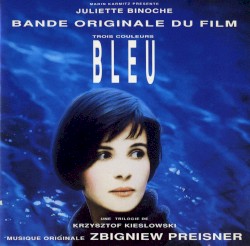
Three Colors: Blue
Zbigniew Preisner · 1993
40 min · 25 tracks · classical
A haunting blend of minimalist orchestration and ethereal vocals that evoke deep emotional resonance.
Three Colors: Blue is an album by Zbigniew Preisner, released in 1993. A haunting blend of minimalist orchestration and ethereal vocals that evoke deep emotional resonance. The album received critical acclaim, contributing significantly to the film's success and elevating Preisner's status within the film industry. It won the Best Film Score award at the 1994 César Awards, further establishing the significance of Preisner's compositions in cinematic storytelling. Here's what makes it worth your time and what to listen to next.
Frequently Asked Questions
What does Three Colors: Blue sound like?
A haunting blend of minimalist orchestration and ethereal vocals that evoke deep emotional resonance. Rooted in classical.
What makes Three Colors: Blue by Zbigniew Preisner notable?
The album received critical acclaim, contributing significantly to the film's success and elevating Preisner's status within the film industry. It won the Best Film Score award at the 1994 César Awards, further establishing the significance of Preisner's compositions in cinematic storytelling. Three Colors: Blue marked Zbigniew Preisner's emergence as a prominent film composer, following his acclaimed work on the 1988 film 'Dekalog'. This soundtrack for Krzysztof Kieślowski's film solidified his reputation in the world of cinema music, showcasing his ability to convey complex emotions through minimalistic arrangements.
How many songs are on Three Colors: Blue?
Three Colors: Blue has 25 tracks, running approximately 40 minutes.
Tracklist
Best experienced from track one — press play and let it unfold.
- 1 Song for the Unification of Europe (Patrice’s version) 5:17
- 2 Van den Budenmayer — Funeral Music (winds) 2:05
- 3 Julie — Glimpses of Burial 0:32
- 4 Reprise — First Appearance 0:34
- 5 The Battle of Carnival and Lent 0:59
- 6 Reprise — Julie with Olivier 0:51
- 7 Ellipsis 1 0:23
- 8 First Flute 0:52
- 9 Julie — In Her New Apartment 1:46
- 10 Reprise — Julie on the Stairs 1:07
- 11 Second Flute 1:18
- 12 Ellipsis 2 0:23
- 13 Van den Budenmayer — Funeral Music (organ) 1:59
- 14 Van den Budenmayer — Funeral Music (full orchestra) Standout 1:49
- 15 The Battle of Carnival and Lent II 0:44
- 16 Reprise — Flute (closing credits version) 2:21
- 17 Ellipsis 3 0:25
- 18 Olivier’s Theme — Piano 0:39
- 19 Olivier and Julie — Trial Composition 2:01
- 20 Olivier’s Theme — Finale Standout 1:40
- 21 Bolero — Trailer for “Red” Film 1:11
- 22 Song for the Unification of Europe (Julie’s version, film) Standout 6:50
- 23 Closing Credits 2:06
- 24 Reprise — Organ 1:15
- 25 Bolero — “Red” Film 1:28
Release Date
January 1, 1993
Genre
Artist Origin
Poland
Runtime
40 min 47 sec
Learn More


Sync your library
Everything you track here works immediately — no account needed. Create one when you want to sync across devices.